
1. Basic Structural Principle of HVM Vertical Roller Mill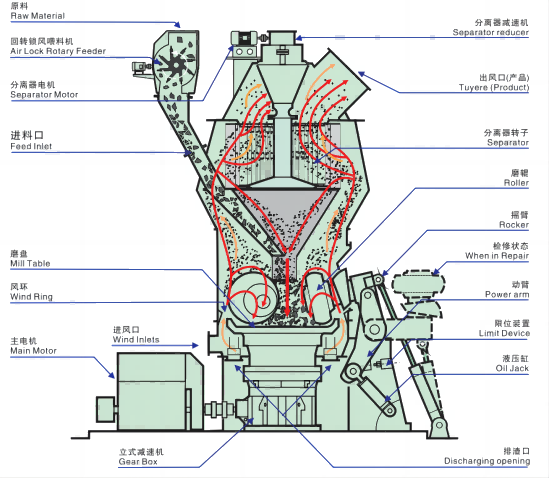
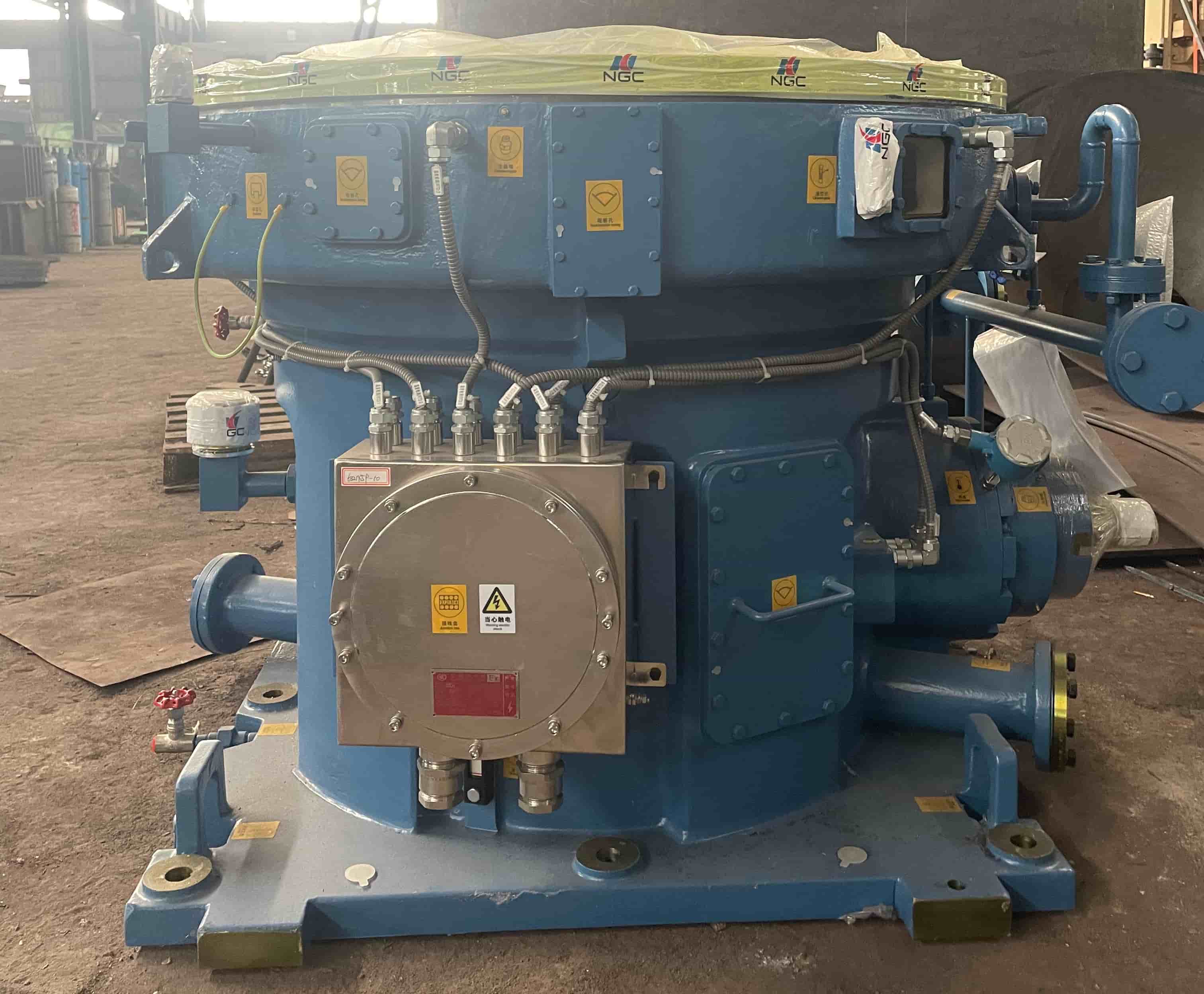
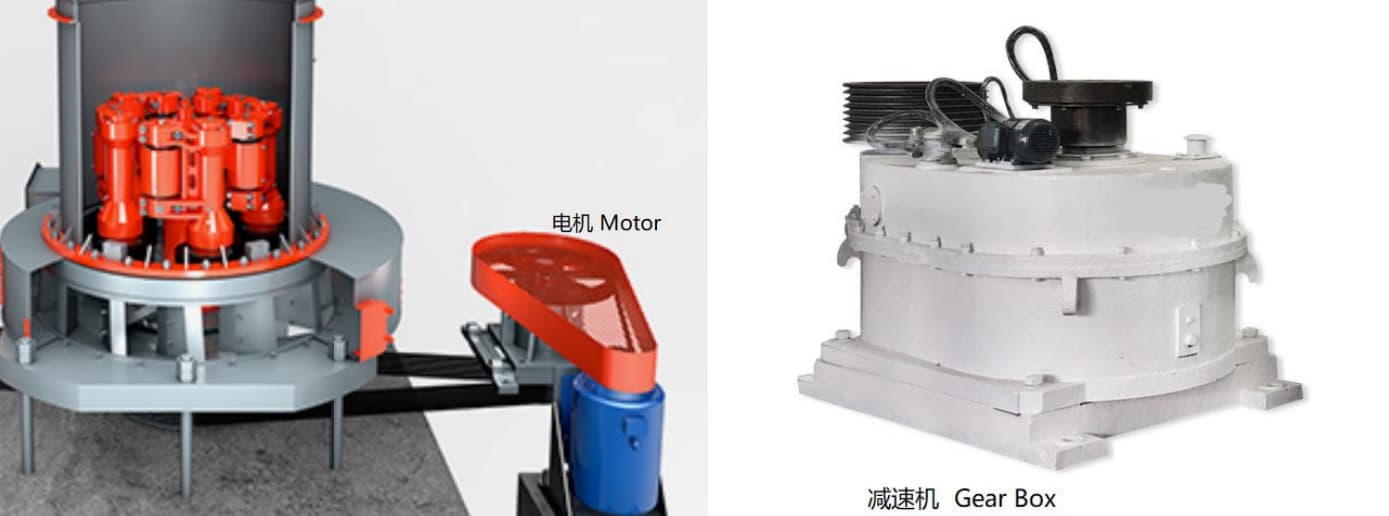
The motor drives the reducer, which rotates the grinding table. The material to be ground is fed through a rotary airlock feeder into the center of the rotating grinding table. Under centrifugal force, the material moves toward the periphery of the table and enters the grinding track. Subjected to the pressure of the grinding rollers, the material is crushed through compression, grinding, and shearing actions.
Meanwhile, hot air is uniformly ejected upward at high speed from the air ring surrounding the grinding table. The ground material is entrained by the high-velocity airflow at the air ring. On one hand, coarser particles are blown back onto the grinding table for regrinding; on the other hand, the suspended material undergoes simultaneous drying. The fine powder is carried by the hot air into the classifier for particle size separation. Qualified fine powder exits the mill along with the airflow and is collected by the dust collection system as the final product. Unqualified coarse particles, under the action of the classifier blades, fall back onto the grinding table to be reground together with the freshly fed material. This cycle repeats continuously to complete the entire grinding process.
 |
 |
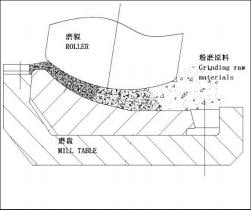
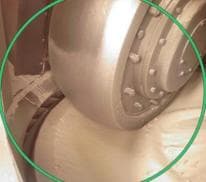
The HVM Vertical Roller Mill operates on the principle of material bed grinding. The material forms a stable bed between the grinding rollers and the grinding table. Through the rotation of the grinding table and the pressing action of the grinding rollers (powered by an independent hydraulic loading system), the material is crushed. This grinding method delivers high efficiency because there is no direct contact between the grinding table and the grinding rollers. As a result, power transmission efficiency is high during the grinding process, and with no metal-to-metal contact, no sparks are generated. This ensures low grinding wear and tear. Furthermore, for flammable and explosive materials, operational safety is effectively guaranteed due to the absence of sparks.
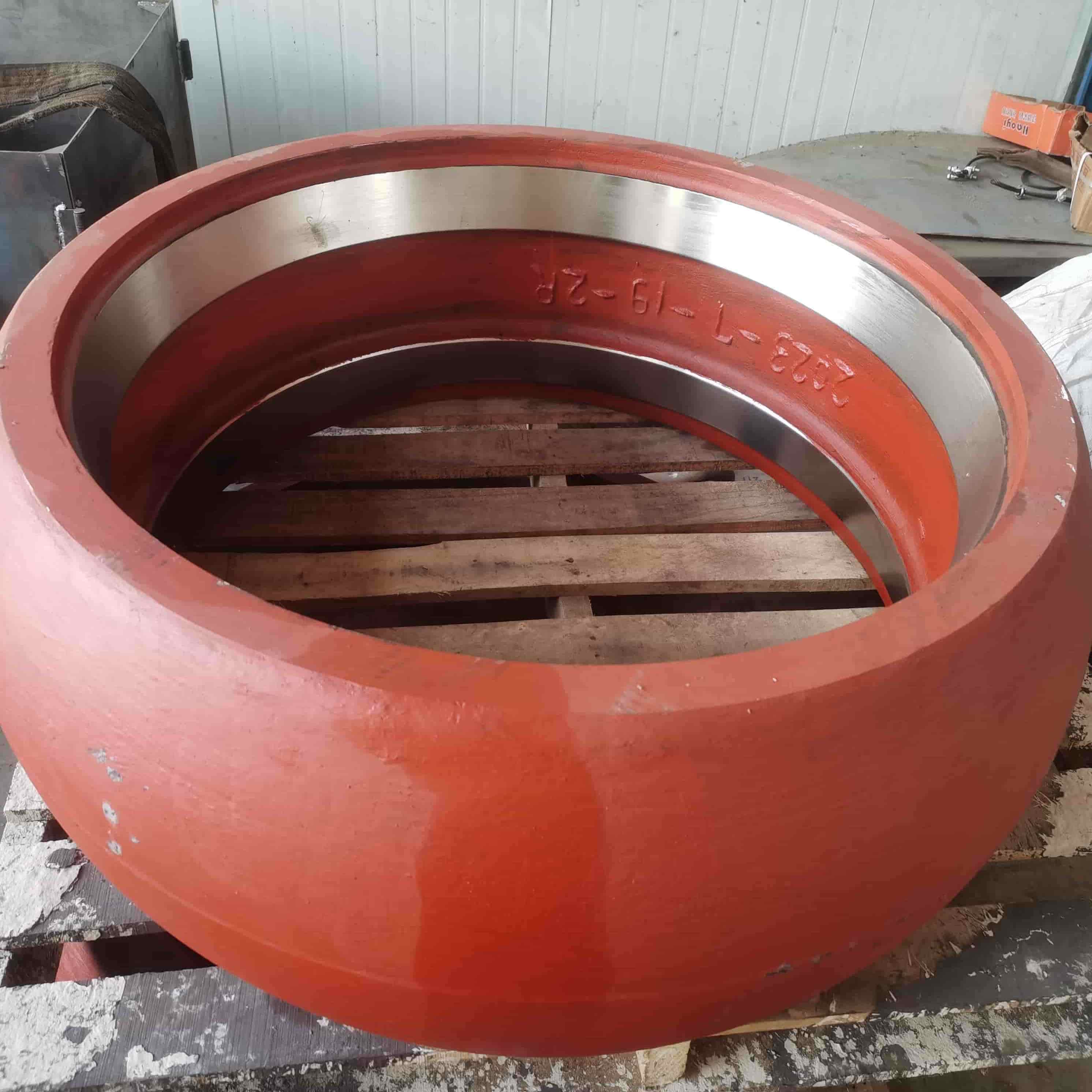
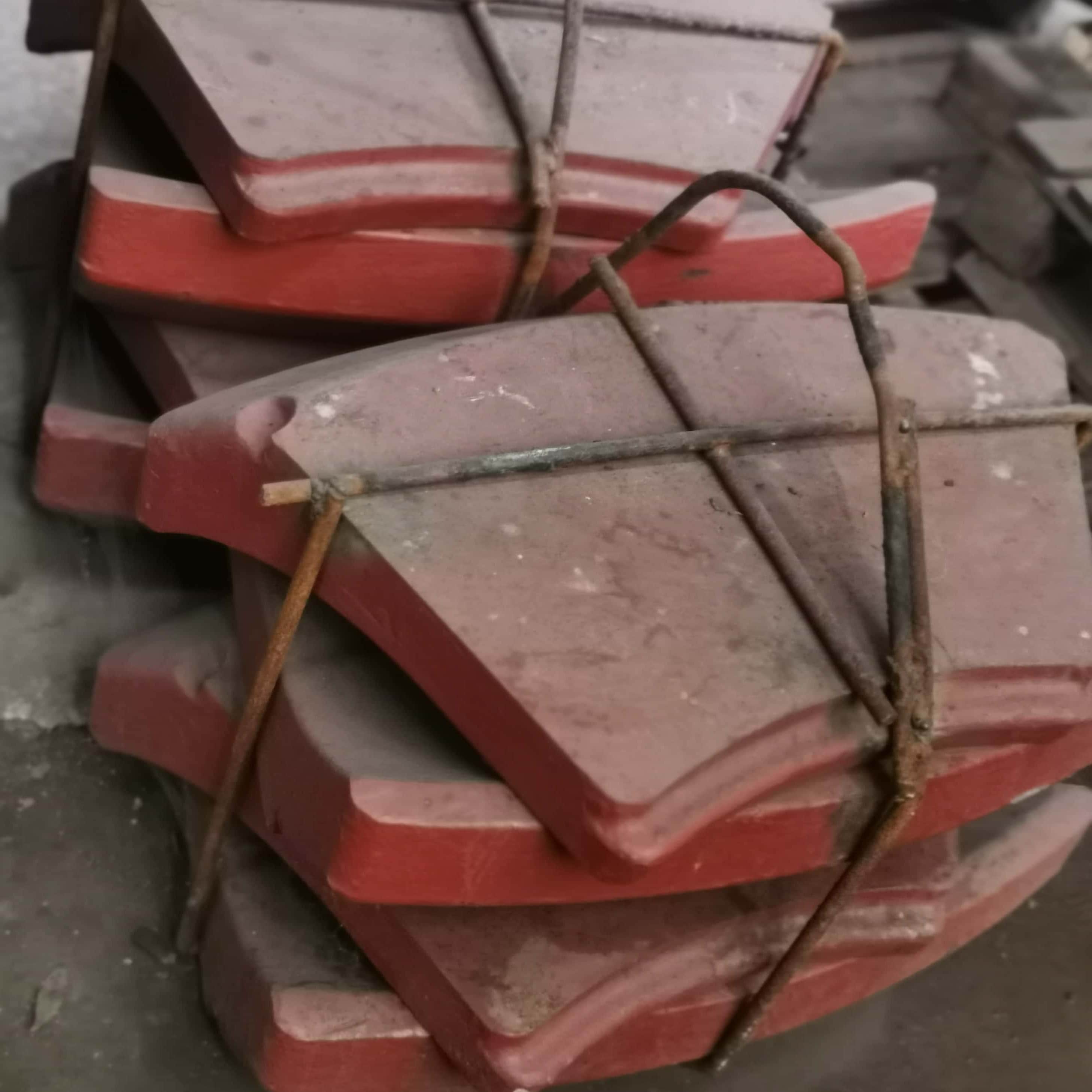
The primary grinding components—the roller sleeves and the grinding table liner plates—are both made of high-chromium multi-alloy materials, offering a service life exceeding 8,000 hours. In addition, thanks to their modular design, the roller sleeves and table liner plates are easy to replace and maintain.
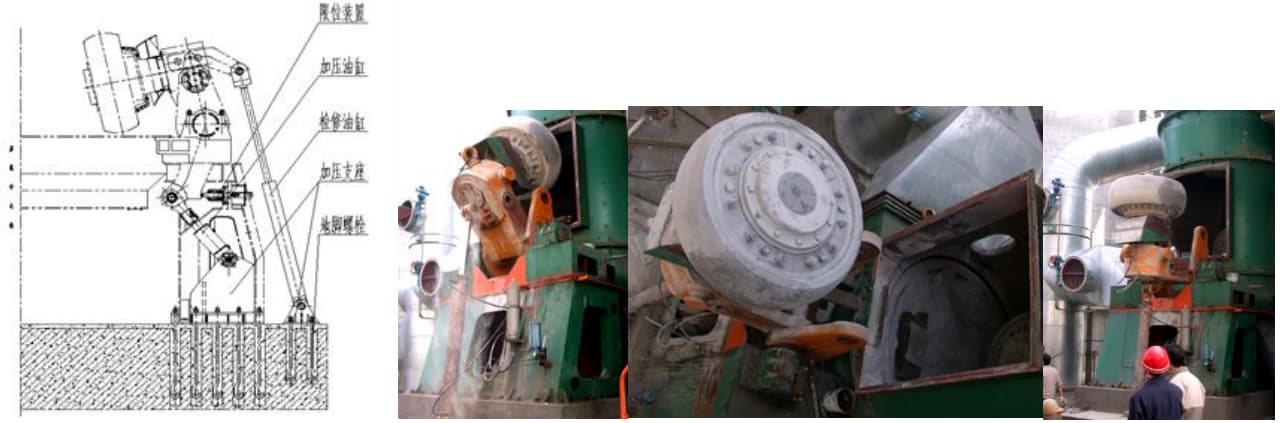
The grinding pressure of the rollers is applied through a hydraulic-pneumatic system. The roller pressure and roller lifting actions can be adjusted via remote control, and on-site manual operation is also available. The mill's hydraulic system comprises the hydraulic power unit, cylinders, accumulators, and piping. Hydraulic pressurization is achieved through the cylinders, while the accumulators serve a damping and buffering function.
The roller sleeves are designed to be reversible for extended service life. With the assistance of the hydraulic system, the grinding rollers can be swung out of the grinding chamber either simultaneously or individually, making inspection and maintenance highly convenient.
In contrast, the Raymond Mill operates on a different grinding principle: the grinding rollers are pressed tightly against the grinding ring under centrifugal force. Material is scooped up by the plow blades and fed between the rollers and the ring, where it is crushed into powder under the rolling pressure. As can be seen, the Raymond Mill does not feature an independent hydraulic system. Typically, its grinding components require replacement and maintenance every 2 to 3 months. Moreover, the direct metal-to-metal collision of the grinding components is highly prone to generating sparks, which poses a significant risk of explosion when grinding flammable and explosive materials—resulting in a major safety hazard. The grinding components of the Raymond Mill consist of the rollers and the ring, which are made of manganese steel. This material offers poor wear resistance, necessitating frequent replacement (at least twice a year) and making maintenance particularly challenging.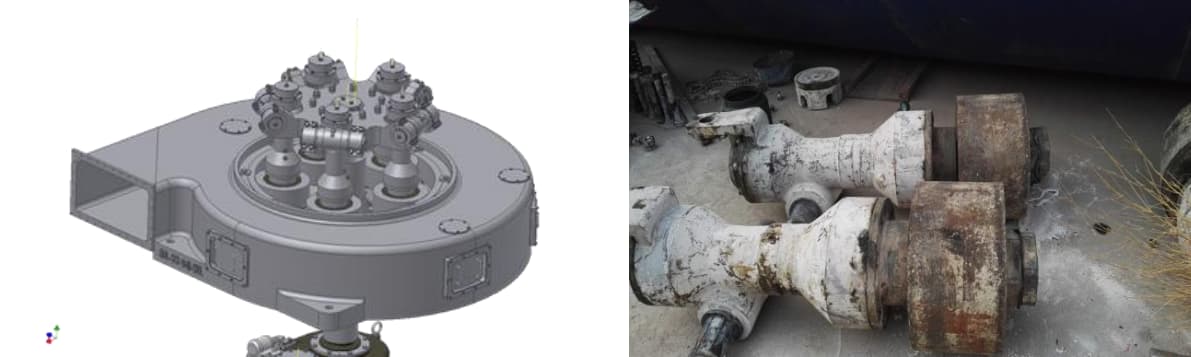
2.3 Comparison of Classifier Systems: HVM Vertical Roller Mill vs. Raymond Mill
The HVM Vertical Roller Mill is equipped with an anti-bypass dynamic-static combined classifier. The classifier rotor cage is designed in a squirrel-cage configuration, incorporating stationary guide vanes and a return cone. This design not only facilitates precise control of product fineness but also allows unqualified material to fall through the cone back to the center of the grinding table for regrinding. During rotation, the dynamic blades generate a certain positive pressure in the upper section, forcing dust-laden gas to pass through the classifier's dynamic blades, thereby yielding a finer product with a wide range of fineness adjustment. The design focuses on optimizing the classifying zone and controlling particle movement, minimizing irregular flow patterns within the mill as much as possible. Key design adjustments include the gap between the dynamic rotor and the guide vanes, the rotor speed, and the number and geometry of the guide vanes. Additionally, the rotor is equipped with an air seal, which effectively prevents coarse particles from entering the finished product, thereby reducing the circulating load and improving grinding efficiency. For flammable and explosive materials, the classifier is fitted with explosion venting panels to ensure timely pressure relief.
The classifier of the Raymond Mill, on the other hand, adopts a purely dynamic classifying structure. It suffers from low classification efficiency, high resistance, and a limited range of fineness adjustment.
2.4 Comparison of Mill Frame and Mill Body: HVM Vertical Roller Mill vs. Raymond Mill
The frame of the HVM Vertical Roller Mill is welded from 18–20 mm thick steel plates, offering exceptional durability and excellent reparability. In contrast, the frame of the Raymond Mill is mostly cast from low-cost nodular cast iron, which lacks durability. Moreover, once damaged, it cannot be repaired due to its poor weldability.
The mill housing of the HVM Vertical Roller Mill is fabricated from 18 mm thick steel plates. In addition, the interior of the housing is lined with 10–12 mm thick 16Mn steel liner plates, which provide a service life of up to 15,000 hours. These liner plates are bolted in place, making replacement easy. Thanks to this design, the HVM Vertical Roller Mill housing can withstand an explosion pressure impact of 0.35 MPa, while the mill body remains free from wear-through issues. The Raymond Mill housing, by comparison, is relatively thin and offers poor explosion resistance and wear resistance, making the mill body highly susceptible to wear-through.
Conclusion
Vertical roller mill grinding offers the following key advantages:
High output and low power consumption. The vertical roller mill employs compression and rolling—the grinding method with the lowest energy consumption and highest grinding efficiency. The resulting ground material features excellent fineness, uniform particle size distribution, and high throughput.
<span style="font-family: 'Microsoft YaHei', 'Helvetica Neue', '
<leave a message
Wechat :


Whatsapp :

Home
Products
contact