Dense Phase Pneumatic Conveying Vessel Pump: The Complete Guide for 2026
Sep 08, 2026
What Is a PCD Dense Phase Pneumatic Conveying Vessel Pump?
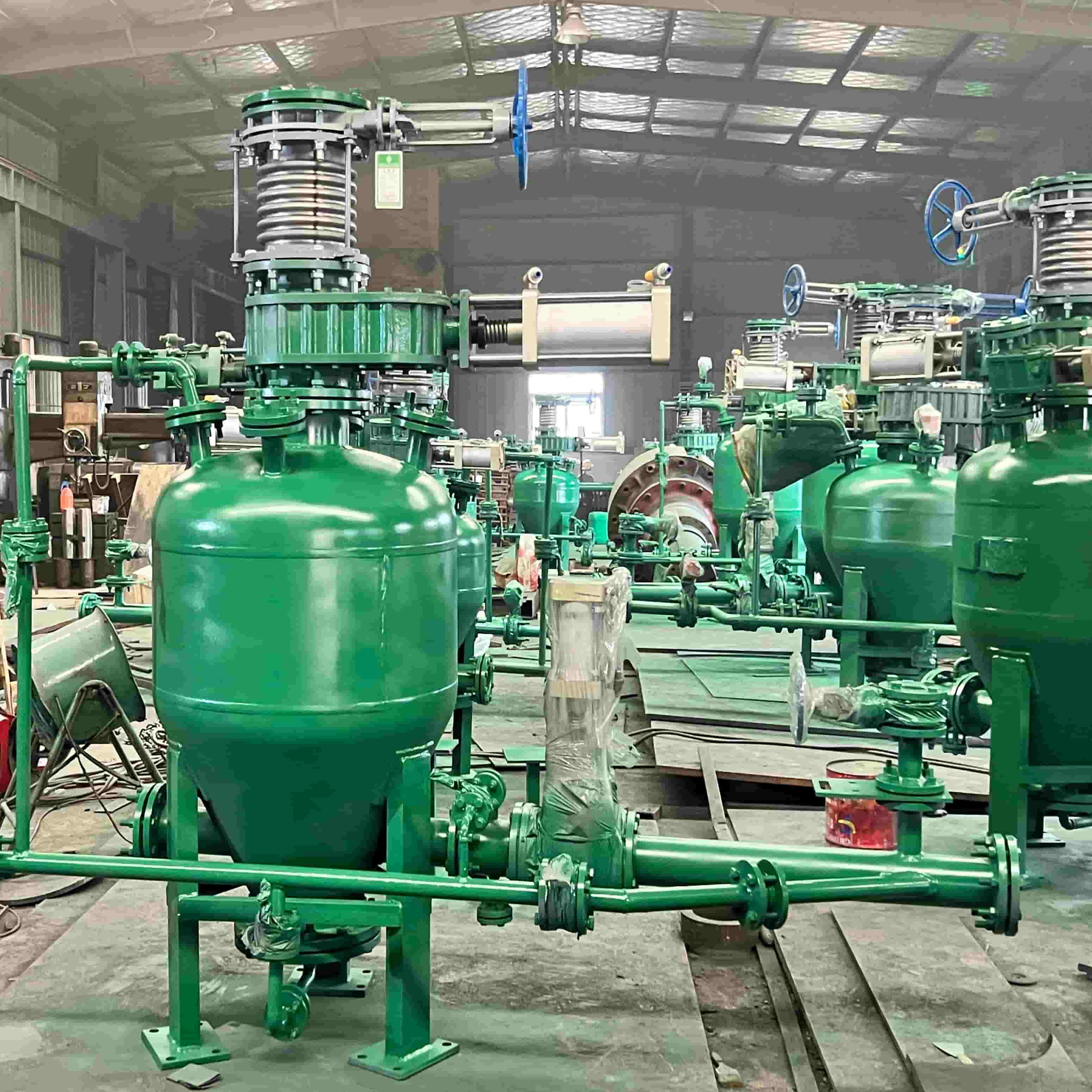
PCD‑type Positive‑pressure Dense‑phase Pneumatic Conveying Pressure Vessel Pump With years of R&D and abundant practical field experience, our company has developed pneumatic conveying equipment and complete process systems with independent intellectual property rights. Its key performance indicators have reached internationally advanced levels. The volume of each pump is custom‑designed according to material properties, particle size, conveying distance and conveying capacity. This customized single‑unit design minimizes conveying energy consumption while fully meeting process requirements. Based on parameters provided by customers, including powder material specifications & properties, conveying distance, throughput and site geographical conditions, we formulate the optimal overall solution for pneumatic conveying, covering air volume calculation, pipeline configuration, dust collection for receiving silos, and after‑sales service planning.
Working Principle of Dense‑Phase Vessel Pump
Dense‑phase vessel pumps perform intermittent batch conveying in four core stages.
During the filling stage, bulk material drops into the pressure vessel by gravity through the inlet valve. Excess air is discharged to dust‑collection equipment to guarantee efficient filling.
Next comes pressurization: inlet and vent valves seal off. Compressed air charges the vessel, reaching working pressures of 7 Barg and higher.
For conveying, the discharge valve activates. Compressed air drives powders along piping under dense‑phase conditions. Flow patterns shift between fluidized moving bed and slug‑plug flow, which depends entirely on material physical properties.
Finally, purging takes place as system pressure falls. Remaining air cleans out pipeline interiors and mitigates clogging risks.
Improved structural designs realize semi‑continuous production: vessel refilling occurs without pipeline depressurization or flow interruption. Dual‑vessel layouts are widely adopted to realize almost continuous material delivery.
--
Application Fields
PCD‑series pneumatic conveying equipment and systems are widely adopted in building materials, chemical, mining, power, and metallurgy industries.
Typical conveyed materials: cement, raw meal, fly ash, slaked lime, dry‑disposed carbide slag, slag powder, steel slag powder, coal powder, alumina powder, vanadium ore powder, phosphorus powder, pyrophyllite powder, silicone powder, etc.
Why Choose Dense Phase Over Dilute Phase?
1. Energy Efficiency
Dense phase systems use significantly less compressed air per ton of material conveyed—often one-third the air consumption of dilute phase systems . This directly reduces your operating costs.
2. Reduced Wear & Maintenance
Because the material moves at low velocity, pipe and elbow wear is dramatically reduced . Some systems incorporate pocket elbows that trap material to protect the deflection point—extending elbow life up to 10:1 compared to standard designs .
3. Material Integrity
Friable or fragile products (like coated urea, extruded alumina, or food ingredients) arrive intact with minimal breakage .
4. Fewer Moving Parts
Many modern dense phase pumps use only one moving part—a dome valve or cone valve on the inlet—reducing maintenance downtime and spare parts inventory
Choosing the Right Dense Phase Vessel Pump
When selecting a system, consider:
Material characteristics – Bulk density, particle size, abrasiveness, friability, and whether the material is fluidizable
Conveying distance – Standard systems handle up to 200 meters; high-capacity models extend to 1,000–1,500 meters
Throughput requirements – From small batch systems at 0.1 t/h to high-tonnage systems over 250 t/h
Temperature requirements – Some designs operate at up to 480°C
Pressure vessel codes – Vessels can be manufactured to most international codes (ASME, PED, etc.)
The Bottom Line
The dense phase pneumatic conveying vessel pump remains the go-to solution for industries that demand reliable, energy-efficient, and low-maintenance bulk material handling. Whether you're moving cement across a plant, conveying fly ash from a power station, or handling abrasive minerals, this proven technology delivers long-distance capability, material integrity, and lower cost of ownership .
Looking to upgrade or specify a new system? Contact our team with your material properties and capacity requirements for a customized solution.